

Private Jet Charter to Phoenix
Explore the economic capital of the Southwest and a major-league sports and snowbird hub with a Private Jet Flight.
Book A FlightBook Private Jet Charters to Phoenix
Phoenix is the economic capital of the Southwest and the fifth-largest city in the country. It anchors a metro of five million people that has grown faster than almost any other over the past decade. The region is now the center of a historic semiconductor boom, with TSMC building multi-billion-dollar fabs in north Phoenix and Intel running major operations in Chandler. It is a major-league sports town that regularly hosts Super Bowls and Final Fours, and a premier winter destination under more than 300 days of desert sun.
A private jet to Phoenix plans around a sprawling, multi-airport metro. The Valley stretches more than 50 miles end to end, and the wrong airport can cost you an hour. At the center sits Phoenix Deer Valley, the busiest general-aviation airport in the world and the metro’s main private-jet hub. Our team knows the Valley’s many fields cold and puts you at the one closest to where you are going, whether that is the north Valley, downtown, the Intel corridor in the East Valley, or the stadium district out west. The city also runs an inverted calendar, with winter the peak and summer the soft season.
Flying Private to Phoenix for Business
The semiconductor build-out is the defining business story in Phoenix right now. TSMC is investing tens of billions in fabs north of the city, Intel runs major operations in Chandler, and a wave of suppliers and engineering partners has followed. Much of that travel is international and schedule-sensitive, and it is reshaping the metro’s business aviation.
The rest of the base is broad and deep. Phoenix hosts around ten Arizona Fortune 500 companies, led by Avnet, Freeport-McMoRan, and Republic Services, with a major American Express footprint and a deep insurance and fintech bench. Banner Health and the Mayo Clinic anchor a large healthcare economy, and Honeywell Aerospace and Boeing’s Mesa operations add an aerospace and defense layer. This is steady, year-round travel that does not track the leisure calendar, and it is what carries Phoenix through the summer.
Planning a trip to Phoenix for Leisure
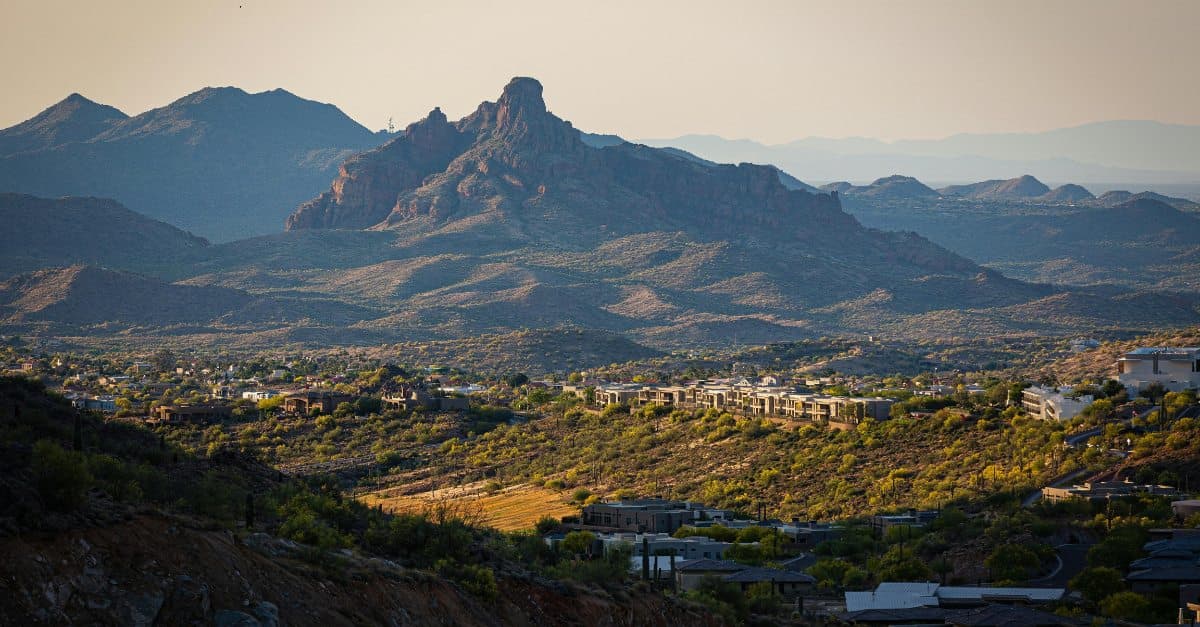
Phoenix in winter is one of the great escapes in the country, and that is the heart of its leisure draw. The desert sun holds through the cool months, which is why snowbirds and golfers flow in from the Northeast, the Midwest, and Canada all season. Golf is everywhere, with more than 200 courses across the Valley. The desert itself is the backdrop, from the climb up Camelback Mountain to the trails of South Mountain and the Desert Botanical Garden.
The city has a real urban side too, beyond the resorts. Downtown Phoenix is a major-league sports town, with the Suns, the Diamondbacks at Chase Field, and the Mercury, plus a growing dining and arts scene around Roosevelt Row. Sonoran-Mexican food is the regional signature. Out in the West Valley, State Farm Stadium hosts the Super Bowls and Final Fours that the city lands regularly, and a private arrival into Glendale or Goodyear skips the gridlock everyone else fights. Sedona’s red rocks and the Grand Canyon are within an easy drive for a day trip.
- Fly Private for a Major Stadium Event: The Valley regularly hosts Super Bowls and Final Fours at State Farm Stadium, each one a Valley-wide private-jet surge centered on the West Valley fields.
- Fly Private for Spring Training: Cactus League baseball brings 15 teams to 10 Valley stadiums from mid-February through March, with more than 1.75 million fans.
- Fly Private for the Snowbird Season: From November through April, the perfect winter draws steady traffic from the Northeast, Midwest, and Canada, peaking around the holidays.

Which Airports near Phoenix are best for Private Jet Charters?
The Phoenix metro has more private-charter airports than almost any market in the country, around 20 within 50 miles. The question is rarely what fits, since several fields have long runways. The question is which airport lands you closest across a metro that sprawls.
- Phoenix Deer Valley (DVT): North of central Phoenix, the metro’s main private-jet hub and the busiest general-aviation airport in the world, with more than 400,000 movements a year. Its 8,196-foot primary runway takes midsize, super-midsize, and many large-cabin heavy jets, served by deep FBO capacity. This is the default for the north Valley, the TSMC corridor, and most private trips. Busy training traffic is the trade-off.
- Phoenix Sky Harbor (PHX): About three miles from downtown, with three long runways and 24-hour customs, the capacity for anything flying. It is the right call for ultra-long-range international arrivals, including the semiconductor corridor’s East Asia travel, the largest heavies, and trips headed downtown. Commercial congestion and higher fees are the trade-offs.
- The Valley’s other fields: Phoenix-Mesa Gateway serves the East Valley and the Intel corridor with long runways and easy parking. Goodyear and Glendale cover the West Valley and the stadium district. Scottsdale serves the northeast and the resorts. Our team picks the one that lands you closest to where you are going.
Choosing the Best Airport for a Private Jet to Phoenix
Phoenix is a multi-airport metro that sprawls more than 50 miles, so the airport choice genuinely changes the trip. Deer Valley is the main hub and the default for the north Valley and most private travel. Sky Harbor is the call for the largest jets, downtown, and international arrivals. Mesa Gateway serves the East Valley and the Intel corridor, Goodyear and Glendale serve the West Valley and the stadiums, and Scottsdale serves the resorts. Our team matches the field to the destination so you land minutes away, and books ramp space early ahead of the winter-peak and major-event surges.
What Type of Private Jets Can I Book to Phoenix
Phoenix is a full-spectrum jet market. Deer Valley’s 8,196-foot runway handles midsize, super-midsize, and many large-cabin heavy jets, while Sky Harbor and Mesa Gateway take anything flying, including the ultra-long-range jets that serve the semiconductor corridor’s long international legs. The metro’s deep based fleet and steady California and Mountain West reposition traffic keep light and midsize availability strong most of the year. Two local factors matter. Summer heat, with routine 105-degree afternoons, affects takeoff performance, so hot-day departures are often timed for cooler hours. And the winter peak tightens the popular categories, so booking early in season is the difference between the aircraft you want and the one that is left.
How Much Is It To Charter A Private Jet to Phoenix?
The cost of your next private jet charter to Phoenix is impacted by all the typical costs like passenger count, aircraft category and the length of your overall trip. That said, chartering a private jet to Phoenix runs on an inverted calendar most destinations do not share. Winter is the peak, when the snowbird season and a dense event schedule sell out aircraft and ramp space, while summer is the soft season offering the best availability and the lowest pricing of the year.
- Aircraft and distance: A light jet from California costs a fraction of a heavy jet from the East Coast or an ultra-long-range jet from overseas. Match the cabin to the trip.
- Seasonality: Phoenix runs an inverted calendar. Winter is peak, the snowbird season plus the dense event schedule, and the highest-demand window of the year, when aircraft and ramp space sell out. Summer is the soft season with the best availability and value.
- Trip type: One-way legs can carry repositioning costs or pick up empty-leg savings. The strong California, Las Vegas, and Mountain West corridors into Phoenix produce real savings off-peak.
How to Book A Private Flight to Phoenix
- Submit Trip Details - Tell us your dates, departure city, passenger count, and where in the Valley you are headed, north Phoenix, downtown, the East Valley and Intel corridor, or the West Valley. That determines the right airport.
- Review Options - Our team returns curated aircraft and airport options matched to your trip, with the right field for where you are going.
- Confirm Trip Details - Approve the aircraft and itinerary, and we handle the FBO, ground transportation, catering, and any customs coordination.
Book Your Private Jet Charter To Phoenix
Phoenix rewards a team that knows the Valley, and that is what Just Landed Jets brings. We know which of 20 airports lands you closest across a 50-mile metro, anchored by Deer Valley, the busiest general-aviation airport in the world. We hold the depth of aircraft options any origin demands, including the long international legs the semiconductor corridor needs, and we book ahead of the winter-peak crush. You land minutes from your destination instead of crossing the Valley from the commercial terminals. You tell us where you are going, and we handle the rest. That is the difference, and it is why our clients come back.
FAQs about Private Jet Charter to Phoenix
How far in advance should I book my Phoenix private jet flight?
For most of the year a few days is fine. For the winter peak from November through April and major-event weekends, the WM Phoenix Open, spring training, Super Bowls and Final Fours, book several weeks ahead, because aircraft and ramp space genuinely sell out in season.
Which Phoenix airport should I fly into?
It depends on where you are going across a 50-mile metro. North Phoenix and most private trips mean Deer Valley, the main hub. Downtown, the largest jets, or international arrivals mean Sky Harbor. The East Valley and Intel corridor mean Mesa Gateway. The West Valley and stadium district mean Goodyear or Glendale. Our team picks the field that lands you closest.
Why is Arizona time confusing for scheduling?
Arizona does not observe daylight saving time. Phoenix stays on Mountain Standard Time all year, which means it lines up with Pacific time in summer and Mountain time in winter. Our team confirms every departure and arrival time against your origin city so there is no confusion.
Is summer too hot to fly to Phoenix?
Not at all, it is just the quieter, better-value season. Summer afternoons routinely top 105 degrees, which affects hot-day takeoff performance, so our team often times departures for cooler hours. Flying is routine year-round. Winter is the premium peak, and summer is the deal.