Beyond Lindsey Vonn’s Crash: Why Medevac Helicopters Are the First Responders of the Alps
Monday, February 9, 2026Dylan AndersonYesterday, the sports world held its collective breath as Lindsey Vonn crashed during her downhill run at the Winter Games in Cortina d’Ampezzo. For a few agonizing minutes, the cameras lingered on the skiing legend as she lay on the snow, clutching her knee. When the medical team signaled for the helicopter, the mood for many casual viewers shifted from concern to alarm. Seeing an athlete airlifted off the mountain creates a visceral image that often signals a life-threatening situation.
However, in the high-stakes world of alpine skiing, the presence of an air ambulance is often a matter of logistics and terrain, not just critical severity. While Vonn’s injury was serious—later confirmed as a fracture on her left leg—the decision to bring in the helicopter was standard protocol for an environment like Cortina.
This moment offers a rare glimpse into a specialized corner of aviation that usually operates in the background: the high-performance world of private air ambulance and Medevac services.
The "Helicopter Rule" in Alpine Sports
To understand why Vonn was flown out, you have to look at the alternative. In a high-alpine environment like Cortina, you cannot simply drive an ambulance up the piste. The traditional method of evacuation is a rescue sled manned by ski patrollers. While effective for minor injuries, a sled ride down a frozen, bumpy World Cup course is potentially damaging for a patient with a complex fracture or spinal concern.
The helicopter offers something the sled cannot: stability. By lifting the skier directly from the slope, the medical team avoids the vibration and physical trauma of a ground extraction. In professional skiing, if an athlete cannot ski down under their own power, the helicopter is almost always the preferred option because it is the smoothest, fastest route to a stabilized environment.
The Flying ICU: What Actually Happens Inside
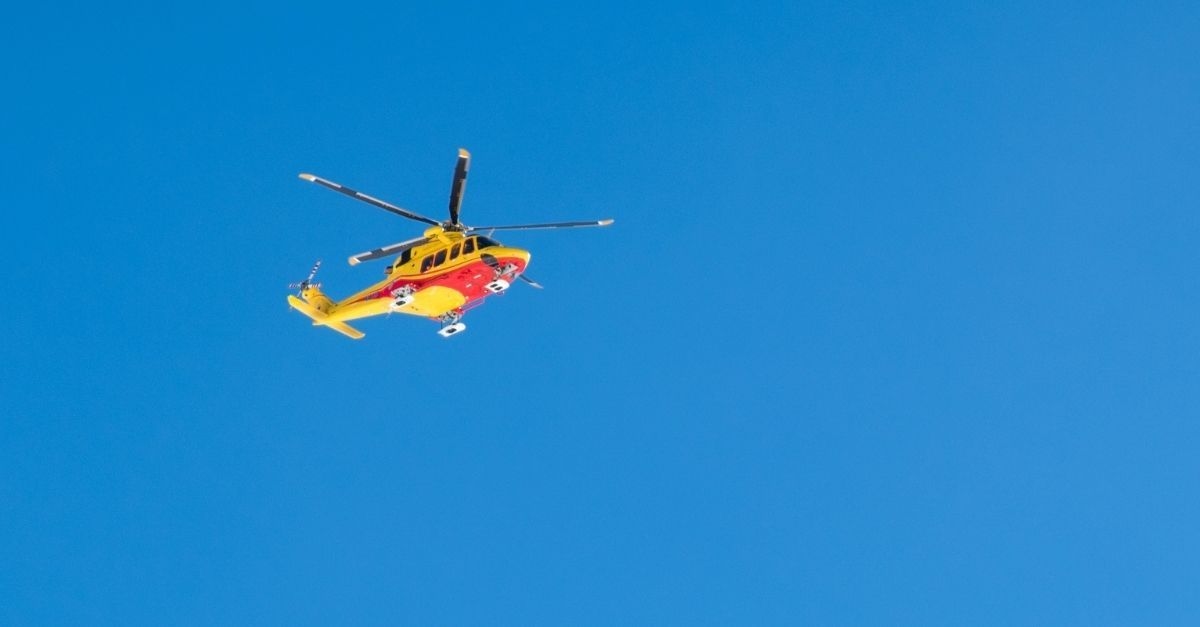
While the cameras focus on the athlete, the real marvel is the aircraft itself. In the European Alps and major North American ski resorts, these missions are typically flown by highly specialized twin-engine helicopters like the Airbus H145 or the AgustaWestland AW169. These are not standard transport choppers; they are flying intensive care units. Inside the cabin, the layout is designed to mirror a hospital trauma bay equipped with cardiac monitors, mechanical ventilators, and infusion pumps.
This level of care isn't limited to helicopters. For longer transports—such as moving an injured skier from Europe back to the United States—the industry relies on the private jet air ambulance. Just like their rotor-wing counterparts, these fixed-wing aircraft are staffed by flight doctors and critical care paramedics who train specifically for the challenges of practicing medicine in a vibrating, unpressurized cabin. They are capable of intubating a patient, managing massive trauma, and stabilizing vitals while cruising at 40,000 feet.
Not Just an Ambulance: The Search and Rescue Role
While Vonn’s rescue was a high-profile medical evacuation, the aircraft that performed it is part of a much wider ecosystem. These machines are the workhorses of the backcountry, frequently pivoting between private air ambulance services and Search and Rescue missions. In the United States and Europe, the same aircraft models you see at the Olympics are often the ones plucked to find lost hikers in the Rockies or rescue climbers in the Sierras.
This versatility comes down to specific capabilities that set these helicopters apart from standard transport. First is the winch system, which allows the crew to hover hundreds of feet above the ground and lower a medic to a patient in dense forests or on cliff faces where landing is impossible. Second is their role as a "flying eye," utilizing Forward Looking Infrared (FLIR) cameras to detect the heat signature of a lost skier in deep powder long before ground teams know where to look. Finally, they are built with massive power reserves engineered to hover steadily at 10,000 feet or higher while carrying a full medical crew.
Just Landed Jets Is Here to Help
Medical travel is complex and often happens under stressful circumstances. Most travelers don't realize that these resources are available to the public until they need them. Whether you require a short-range helicopter transfer or a long-range medevac private jet charter to bring an injured family member home from abroad, these assets provide a vital safety net.
If you find yourself needing to arrange a medical transport, Just Landed Jets can help you navigate the logistics. We coordinate with top-tier medical operators to secure the right private air ambulance and medical crew to ensure your loved ones get home safely.
Read More Latest Updates
Stay informed about private aviation trends, industry news, and travel insights.
Do Private Planes Go Through Customs?
Wondering if private planes go through customs? Learn how private jet passengers clear customs quickly, often right at the FBO, with Just Landed Jets.
Read MoreWhy a Private Jet is the Best Way to Fly with Pets
Fly private with your pet. Just Landed Jets offers pet-friendly private jet charters, eliminating airline restrictions and ensuring an excellent experience flying with pets.
Read MoreWhy Is It Easier to Fly Private With Your Pet?
How does flying private affect your pet? Get vet-backed tips on cabin comfort, calming anxious pets, and prepping your dog or cat for a private jet flight.
Read More